Tuesday, April 27, 2010

How To Boycott Arizona (An Idiots Guide)

Got Your Panties In A Bunch Over the Arizona Illegal Alien Law? Here's What To Do:

Several cities (including San Francisco) and and many groups including 'LA Opinion' (an editorial segment of the LA Times) are promoting a full scale boycott of Arizona. Let's have a quick look at exactly how dumb those groups are and what you can do to join them:

Arizona's #1 crop is lettuce. Stop eating salads unless it is certified 'Arizona free'. Since nearly all lettuce is picked by undocumented workers you will primarily be hurting illegals 1st and the farmers that hire them 2nd. These are exactly the people that the law is meant to constrict.


Beef Cattle and Dairy are Arizona's leading source of farm income. Cease beef eating and milk drinking wherever possible in order to deny Arizona of this income. Again, these segments are heavily dependent on undocumented workers so they will be the ones who are actually laid off and perhaps forced to return to Mexico, Latin America, or other countries of origin.


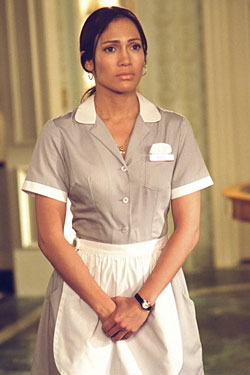
Stop your travel plans to Tuscon, Flagstaff, and Scottsdale. The Tourism income from resorts, hotels, and restaurants are a major source of revenue for the 'Grand Canyon State'. Just a quick disclaimer: Many of the folks who staff those businesses are undocumented. So, perhaps they wont exactly be living the J-Lo dream after they are laid off.

Copper is AZ's #1 most important mined product (they are the #1 state in copper production). Copper wire never shows state of origin but you can definitely call off all new electrical projects or repairs. Doing so would only impact your local electrician since copper pricing and sales are just as global as crude oil. (But you are welcome to sit in the dark).


A few other products such as space vehicles and guided missiles are designed and built in AZ. So be absolutely certain to avoid all space travel and geopolitical strife in your daily routine.


All in all the boycott should have a much larger affect on moving non-citizens out of Arizona then the law could ever accomplish. So... Boycott? Well, that sounds like the quickest way to bring about the means that Arizona is asking for.

UPDATE April 28, 2010:

Several other websites such as Gawker have begun publishing lists of companies that are based in Arizona. Again the concept is to punish the AZ economy so that the government will have to change its tune. Here is a partial list of companies: Best Western, Cold Stone Creamery, Discount Tire Co, Greyhound, PetSmart, PF Changs, Ramada, Sky Mall, U-Haul and the list goes on.

To boycott or not is the question. The answer: boycotting most of these companies will only hurt the local franchise owner and the people that are employed there. These are your neighbors and maybe even you. BTW, many of those companies are based in Phoenix, Tucson, and Scottsdale - three of the cities that are considering legislative action against the state because they don't share widespread support for the new law.

If you want to punish the supporters of the law then make sure to stop doing business with Jeb's Transmission repair shop in Yuma; it's just a few miles north of the border; Jeb is the guy sitting out front with a shotgun.

Idiots: Do as you will, ignorance is bliss.

The Plastico Blog. 2010. All Rights Reserved
Your Los Angeles Homepage


Tuesday, April 6, 2010

Finally A Great Reason To Raise Taxes In CA!!!

Sacramento: California's three major public pension funds are collectively more than a half-trillion dollars underfunded if their projected investment earnings are adjusted downward to a "risk-free rate," a team of graduate students at Stanford University has calculated.

The report, conducted under the aegis of Stanford's Institute for Economic Policy Research,Arnold Schwarzenegger's case for an overhaul of the state's pension systems. bolsters Gov.

"The consequences are clear," Schwarzenegger said. "Increasingly large portions of state funding for programs Californians hold dear such as schools, parks and health care will be diverted to pay for this debt."

Schwarzenegger has proposed a broad pension overhaul, including shifting new employees to a new, lower-cost system and raising state employees' pension contributions. With opposition from public worker unions, his plan has gone nowhere.

CalPERS, CalSTRS and the UC retirement system now use a projected "discount rate" on their pension liabilities of 7.5 percent to 8 percent, the same rates as their projections of annual earnings on investments. Critics say those are too high in today's climate.

The Stanford team based its underfunding estimate on a "risk-free" discount rate of 4.14 percent, which results in higher projected liabilities than the systems now portray.

Tuesday, December 22, 2009

Small-business bankruptcies rise 81% in California

With credit tight and consumers still pinching their pennies, many business owners find they can't go on.

The Obama administration's new plan to give a boost to small businesses reflects continued trouble in that sector, which is facing new failures even as much of the nation's economy is stabilizing.

As credit lines have shrunk and consumers have cut back on spending, thousands of small businesses have closed their doors over the last year. The plight of struggling firms has been aggravated by the reluctance of banks to lend money, said Brian Headd, an economist at the Small Business Administration's office of advocacy.

"While bankruptcies are up, overall, small-business closures are up even more," Headd said.

California has been particularly hard hit. The latest data show small-business bankruptcies up 81% in the state for the 12 months ended Sept. 30, compared with the previous year. Filings nationwide were up 44%, according to the credit analysis firm Equifax Inc.

The actual number of small businesses in trouble is probably higher, experts said, because many owners file for personal bankruptcy rather than seek protection for the business.

Dennis McGoldrick, a bankruptcy lawyer in Torrance, said his clients are all stuck in similar situations -- capital is hard to come by, customers are tough to attract and debt is piling up."We can't keep up," McGoldrick said. "There's more people that want to come in every day than I can see."

Cecily McAlpine, who filed for bankruptcy protection for her Cold Stone Creamery franchise this spring, said the experience was humiliating but she had no choice. Receipts at the fledgling Compton ice cream shop plunged dramatically during the recession, and by late 2008 she was paying her employees out of her pocket.

"When the refrigerator died, that was it; I'd just had it," McAlpine said. "That was the day I broke. I just started throwing stuff away."

McAlpine recently withdrew her bankruptcy filing after selling all the store equipment and paying off her creditors. She is slowly paying off some back-rent and utility debt, and will officially dissolve her business in the next couple of weeks, she said.

"I still feel scarred and like a loser," she said. "Even though I'm not in it anymore, it's still there."

Recognizing the problems of business owners like McAlpine, the Obama administration has proposed using federal stimulus money to help funnel more loans to small businesses. The White House has also asked Congress to eliminate capital gains taxes for one year on new investments in small-business stock, and called for a new tax incentive to encourage small businesses to hire more employees.

On Dec. 14, Obama called a meeting of executives of Wells Fargo & Co., Citigroup Inc., Bank of America Corp. and nine other large banks, and told them that they owed it to the nation to make more loans to small businesses and help rebuild the economy.

In California, the need is great. Over the last year, the Los Angeles, Riverside/San Bernardino and Sacramento metropolitan areas have led the nation in small-business bankruptcy filings, said Tim Klein, a spokesman for Equifax.

About 19,000 small businesses filed for bankruptcy in California during the 12 months ended Sept. 2009, up from 10,500 the previous year.During September alone, 2,229 small businesses filed for protection, up from 1,503 filings in September 2008, the firm reported.

Kathleen March, a bankruptcy lawyer in Los Angeles, said she often pushes her clients to file for personal bankruptcy instead of a business filing because it's easier.
Many people also close down their businesses thinking that will solve their problems, only to find their companies' debt lives on, March said.

Tuesday, December 1, 2009

CEO's rate California 'Worst State To Conduct Business' for 4th Consecutive Year

CEOs Select Best, Worst States for Job Growth and Business

chiefexecutive.net:

Texas, North Carolina, Florida Top List as Best States; California, New York, Michigan Are the Worst

As the nation’s unemployment figures continue to reach new heights, Chief Executive magazine's 2009 "Best & Worst States" survey took CEO's pulse on what the best and worst places for jobs and business growth are. For the fourth year in a row, CEOs rated Texas as the #1 state to do business and California as the worst.

Chief Executive's fifth annual survey asked 543 CEOs to evaluate their states on a broad range of issues, including proximity to resources, regulation, tax policies, education, quality of living and infrastructure. Providing additional insight to the evaluations, CEOs were also asked to grade each state based on the following criteria: 1) Taxation & Regulation, 2) Workforce Quality, and 3) Living Environment.

"Our survey, year-over-year proves that those states with the worst records continue to practice the same policies that alienate businesses," said JP Donlon, Editor-in-Chief of Chief Executive magazine. "As the nation’s economic problems continue to snowball and an increasing number of states experience budgetary problems, state governments ought to take a hard look at their taxation and unionization policies if they want to turn the page and attract new businesses and capital to their provinces."

Once again, this year, the same states that took the bottom five spots over the past few years preserved their rankings for the most part. For the fourth year in a row, California and New York were ranked the worst and second worst state to do business in, respectively. Michigan was ranked third from the bottom for the second year in a row. The only difference in the bottom five was a flip in the worst fourth and fifth states, as New Jersey took over Massachusetts as the fourth worst state.

Plaguing business growth and opportunities in these states are high business taxes exposed on business owners as well as a strongly unionized labor force. Coincidentally, all the bottom three states, California, New York and Michigan, also support some of the nation’s highest unemployment rates - 10.1 percent, 7.6 percent and 11.6 percent, respectively, as of January (most recent data available). This compares to a national average of 7.6 percent in the same month (national unemployment rate reached 8.1 percent in February).

Expressing the prevalent attitude among CEOs, one CEO said, "Michigan and California literally need to do a 180 if they are ever to become competitive again. California has huge advantages with its size, quality of work force, particularly in high tech, as well as the quality of life and climate advantages of the state. However, it is an absolute regulatory and tax disaster, as is Michigan."

As states put on an intense competition to attract business and investment in this tough economic environment, Chief Executive magazine's Best & Worst States survey experienced a flurry of activity in the top ranks with the entry of three new states into the top five: Florida, Georgia and Tennessee.

Texas maintained its #1 spot in the ranking for the fourth year in a row, as North Carolina, Florida, Georgia and Tennessee all jumped up in ranks, taking the #2, 3, 4 and 5 spots, respectively.

"Texas and the Carolinas are great for business," said one CEO. "South Carolina's Research Authority is exemplary in terms of creating new economic growth and Texas is strategically centered, has low taxes, and outstanding demographics."

As a testament to this statement, in contrast to much of the nation, in fiscal 2008, Texas' gross state product grew by 4.2 percent, compared to 1.9 percent for the national economy.


Monday, November 30, 2009

California Air Board (CARB) Takes Page Right Out of CRU/IPCC 'Climategate' Fiasco

Huge Changes to California Diesel Regulations May Be Thrown Out Following the Admission of A Cover Up At the State Air Board. | Friday, Nov 20 2009 07:31 PM
It's not the lie, it's the cover up that'll get you.

How many times does this wisdom have to be pounded into the heads of bureaucrats?

The scandal over how a lead researcher behind California's new diesel truck rules lied about his credentials continues to grow.

At Thursday's California Air Resources Board meeting, one of the board members said the legitimacy of the rule is in question because of the lie and subsequent cover up and asked for a legal opinion on what should be done next.

The problem started with Hien Tran, the lead author of the report on which the new diesel rules were based, who lied about having a Ph.D. degree in statistics from U.C. Davis.

Though the lie was brought to some CARB bureaucrats' attention well before the vote on the draconian rules last December, it was kept "in house" until I and an editorial writer for the San Diego Union Tribune got wind of it and started hammering on it early last spring.

Turns out, not all the board members, who voted on the rules based on Tran's report, were told of his lies.

But some were -- and kept mum.

The issue was brought to the full board's attention at its September meeting in Diamond Bar by regular citizens.

At the time, board member John Telles, a medical doctor, was quite upset, saying, "This is the first time I've actually been apprised that there was fraud in the organization here.

"In my world, if an article was published by somebody who didn't have a Ph.D. and said he had a Ph.D., the whole thing would be nixed...I just find it incredible."

Well, he did some of his own digging and at this week's meeting he asked that CARB's legal counsel issue an opinion on what more should be done.

Telles also laid out a stunning chronology that revealed many CARB muckey-mucks, including chair Mary Nichols, knew about the lie before the vote and never said anything.

Tran's lie was first brought up by Dr. Stan Young in November 2008 to the California Secretary of the Environmental Protection Agency, who sent Young a letter dated Nov. 4, 2008, assuring him of Tran's credentials.

Then on Dec. 3 and 4, 2008, UCLA professor Jim Enstrom contacted three CARB board members telling them of Tran's indiscretion.

One of those board members, who I've reported was John Balmes, asked CARB staffers to investigate.

By Dec. 10, Tran had confessed. Those in the know included Nichols, Balmes and at least five other top CARB members.

The vote on the diesel rules using Tran's report was the next day, Dec. 11, 2008 and the full board wasn't told.

Even after the cat was out of the bag at last September's meeting, Telles said, "Staff never mentioned that they had this information prior to the vote."

Based on all that, Telles said, the legitimacy of the vote is in question as well as the legitimacy of the truck rule "and CARB itself."

"How we handle this reflects on the future credibility of CARB."

Tuesday, November 10, 2009

da Vinci Coming Soon - Wont Have Time For Autographs....

Leonardo da Vinci drawings coming to L.A.

November 10, 2009 | 11:36 am

Angel It's not often that artwork by Leonardo da Vinci makes the journey to Los Angeles. But in December, three drawings by the Renaissance master will go on display at L.A.'s Italian Cultural Institute along with a video installation by Bill Viola.

Leonardo's "The Angel in the Flesh," pictured, dates from around 1515 and was produced by the artist in Amboise, France. It depicts a smiling, androgynous figure in the process of lifting its right arm in salutation. This marks the first time that "Angel" will be shown in the U.S., according to Francesca Valente, who is organizing the exhibition.

Also part of the show are two sketches from Leonardo's "The Theatre Sheet," which is believed to have been created around 1506 to 1508. The two fragments are figure studies for a stage set of Angelo Poliziano’s "Orpheus." The drawings come from "The Mind of Leonardo," a recent exhibition at the National Museum of Palazzo Venezia in Rome.

Video artist Viola will present his 2002 work "The Last Angel" as part of the show. The installation features slow-motion imagery of an angelic figure in water, accompanied by an original soundtrack. Viola is scheduled to appear in person on Dec. 2 to present his work in a discussion with author Carlo Pedretti, who is a Leonardo scholar and UCLA Professor Emeritus.

The exhibition will run Dec. 2-12.

-- David Ng, Plastico Contributer

Big Surprise - CA Budget Still Far From Solvent....

Gov. Arnold Schwarzenegger estimated Monday that California's budget will fall out of balance by $5 billion to $7 billion this fiscal year, on top of a $7.4 billion gap already projected for 2010-11.

If true, state leaders would confront at least a $12.4 billion to $14.4 billion problem when Schwarzenegger releases his budget in January. California currently has an $84.6 billion general fund budget.

The Republican governor spoke with The Fresno Bee editorial board Monday after signing a bill placing a water bond on the November 2010 ballot.

He emphasized deep spending cuts as a budget solution but did not mention tax increases. Schwarzenegger and legislators agreed to cuts to education and social services, as well as temporary tax hikes, in two budget deals earlier this year.

"We are not out of the woods yet. ... The key thing is, we have to go and still make cuts and still rein in the spending," Schwarzenegger said. "It will be tougher because I think the low-hanging fruits and the medium-hanging fruits are all gone. I think that now we are going to the high-hanging fruits, and very tough decisions still have to be made."

The state is $1 billion behind in tax revenues through the first three months of the 2009-10 fiscal year. Courts also have blocked some cuts in the current budget, such as in-home care reductions.

Besides the struggling economy, a major budget problem is that state leaders relied on risky assumptions – which may never come to fruition – in bridging a $60 billion, two-year budget deficit this year.

Schwarzenegger also discussed a wide range of other topics:

• Lieutenant governor pick: A replacement for Democrat John Garamendi, who was elected to Congress last week, will come within two weeks, Schwarzenegger said. "There's no urgency," he said.

He said he wants a lieutenant governor "who will follow through with the plan I set out. ... Right now the system doesn't work to have a lieutenant governor from the opposite party."

Schwarzenegger said Sen. Dave Cogdill, R-Modesto, who was seated next to him at the meeting, was "absolutely" on his short list.

A Republican – especially one intending to run again – may have a tough time winning confirmation in the Democratic-controlled Legislature.

• Tax commission recommendations: Schwarzenegger said lawmakers should immediately debate the tax system changes recommended by a task force "rather than go on trips all over the world which they will do in November ... and say, 'Let's make a commitment, we're going to go and stay here until Christmas and then let this be a great Christmas vacation because we have accomplished one more important thing.' "

• Pension changes: Schwarzenegger made a pitch for a plan to devise a less lucrative pension system for future public employees. "We have to get serious about rolling back the pensions to the 1999 level for new employees," he said, noting that the state's general fund will have to take on an increasing responsibility to pay pension costs. "Eventually, the $1.5 billion (a year) that's being paid now will go up to $11 to $13 billion a year."

Monday, September 7, 2009

Labor Day In California... A Dan Walters Update...

Published: Monday, Sep. 7, 2009 - 12:00 am

This is not a celebratory Labor Day for California's workers, and that includes government employees who believed that labor contracts and civil service rules gave them bulletproof job protection.

California is mired in one of its worst economic recessions, with unemployment approaching 12 percent and likely to rise higher, but even those with jobs are often pinched by wage freezes and reductions, furloughs and cuts in fringe benefits.

The jobless rate is twice as high as it was a year ago, the California Budget Project points out, and the recession has wiped out the state's employment gains in the last four years. The 57.5 percent of working-age adults who have jobs is the lowest rate in three decades, reflecting both the recession and the ever-growing retiree cohort.

The fact that California has been hit extraordinarily hard has sparked an intense, even bitter, public debate about whether the state has crippled itself for the long term and will not see a return to prosperity even when the rest of the nation recovers.

Conservatives point to the state's high taxes and penchant for regulatory overkill as making it what one state commission called a "job-killing machine." But liberals contend that allowing the state's infrastructure, schools and colleges to erode by reducing spending has made California less innovative and attractive to investment.

The debate rages on the airwaves and in legislative chambers; just last week, Gov. Arnold Schwarzenegger vetoed, for the third time, legislation that would allow the United Farm Workers union to organize with "card checks" rather than elections.

Even public worker unions are finding the going tough in these recessionary times. Furloughs have become common. The once-impregnable California Correctional Peace Officers Association is losing a battle against sharp cuts in prison spending. The California Teachers Association has been unable to block deep school reductions. Last month, trustees of the giant Los Angeles Unified School District, defying its teachers union, voted to massively expand charter schools.

As the 2009 legislative session comes to a close, unions are engaged on several fronts. While the Service Employees International tries to win ratification of a state worker contract that would limit furloughs, local government unions are pushing a late-blooming bill to make municipal bankruptcy (such as Vallejo's) more difficult and other labor groups are trying to raise long-frozen benefits for injured workers.

The California Commission on Health and Safety and Workers' Compensation has proposed a tuneup in the system that would, it says, save as much as $1.4 billion a year in employer costs, largely by overturning a decision by the Workers' Compensation Appeals Board that undermined some of the 2004 reforms that cut costs sharply.

Labor's price for enactment of the new reforms, in whole or in part, would be a boost in benefits for injured workers.


blogger templates | Sponsored By The Comedy Hub Network